Tag: aging in place

  • Remote Caregiving Technology Guide

    Remote Caregiving Technology Guide

    This federal grant addresses persistent healthcare access disparities in rural regions, where long travel distances and a shortage of medical specialists often delay necessary treatment. By funding secure electronic health record upgrades and remote patient monitoring infrastructure, the initiative equips homebound individuals and remote caregivers with practical tools to manage chronic conditions alongside local medical teams. The targeted state-level upgrades align with broader federal efforts to establish a modern, decentralized healthcare delivery model across rural America.

    Table of Contents

    Table of Contents — Remote Caregiving Technology Guide
    1. Key Components of the North Carolina Healthcare Technology Grant
    2. Implementation for Remote Caregivers and Local Clinics
    3. Nationwide Federal Investments in Emergency and Specialized Remote Care
    4. Telehealth Billing Policy and Regulatory Shifts for Remote Care
    5. Frequently Asked Questions

    Key Components of the North Carolina Healthcare Technology Grant

    Key Components of the North Carolina Healthcare Technology Grant — Remote Caregiving Technology Guide

    These technical upgrades directly target the infrastructure deficits that historically disrupt rural healthcare delivery. By strengthening local network security and digitizing patient record systems, regional clinics can integrate remote monitoring hardware that tracks vital signs and patient status outside traditional clinical settings.

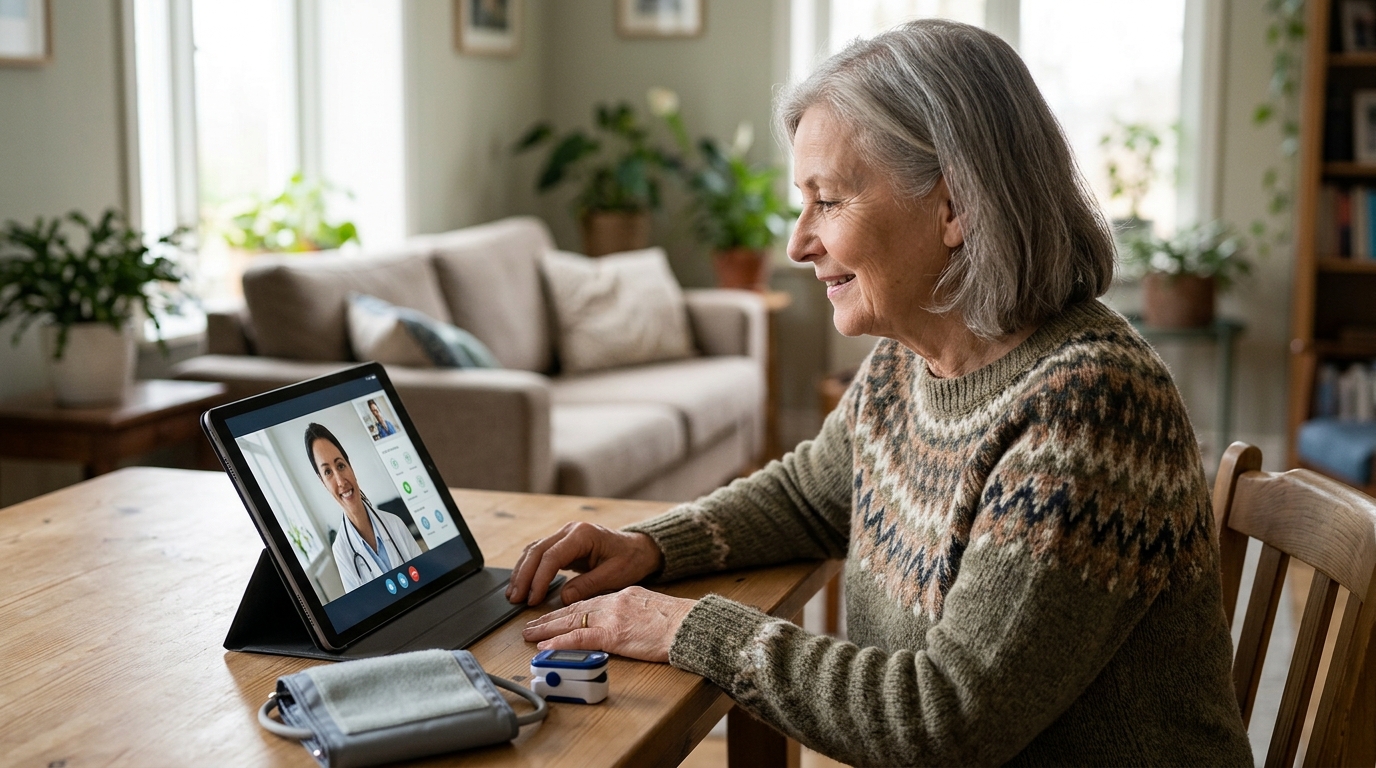
    The deployment of remote monitoring technology allows clinics to observe continuous patient data feeds, including blood pressure, blood glucose, and oxygen levels, without requiring in-person visits. This operational shift reduces transportation burdens for rural families and elderly residents who otherwise travel hours for routine checkups. Furthermore, modern electronic records give attending physicians immediate access to accurate patient history, enabling timely clinical interventions before minor symptoms escalate into medical emergencies.

    Integrating these clinical data systems also protects sensitive patient information against cyber threats while maintaining uninterrupted communication links between community clinics and regional medical centers. Representative Greg Murphy noted that expanding telehealth, improving electronic records, strengthening cybersecurity, and utilizing artificial intelligence responsibly will help rural clinicians modernize their practices while keeping high-quality care closer to home.

    Implementation for Remote Caregivers and Local Clinics
    Implementation for Remote Caregivers and Local Clinics — Remote Caregiving Technology Guide

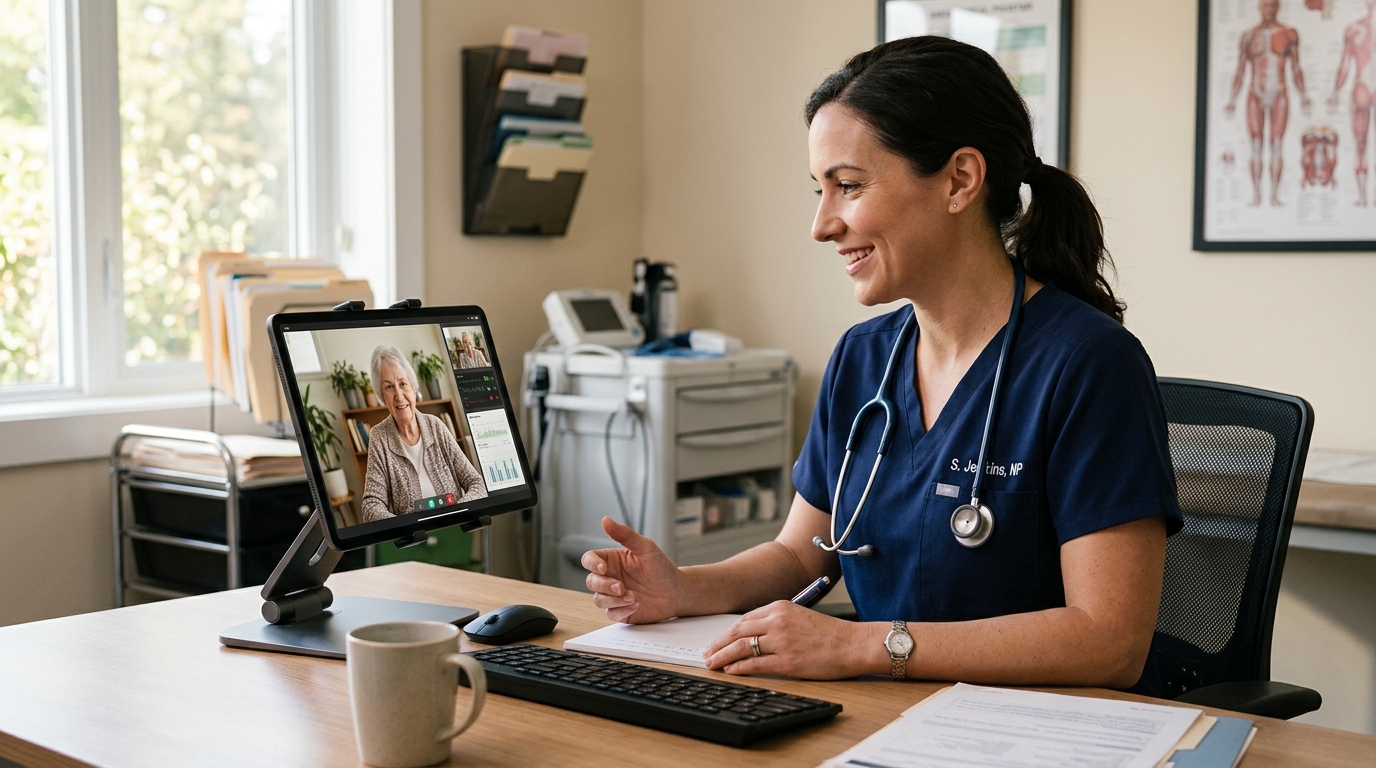
    The influx of digital tools fundamentally alters daily workflows for local clinics and family caregivers assisting patients with chronic illnesses. Upgraded virtual care systems establish direct communication channels between home-based caregivers and off-site clinical specialists, allowing for real-time consultations and immediate care adjustments.

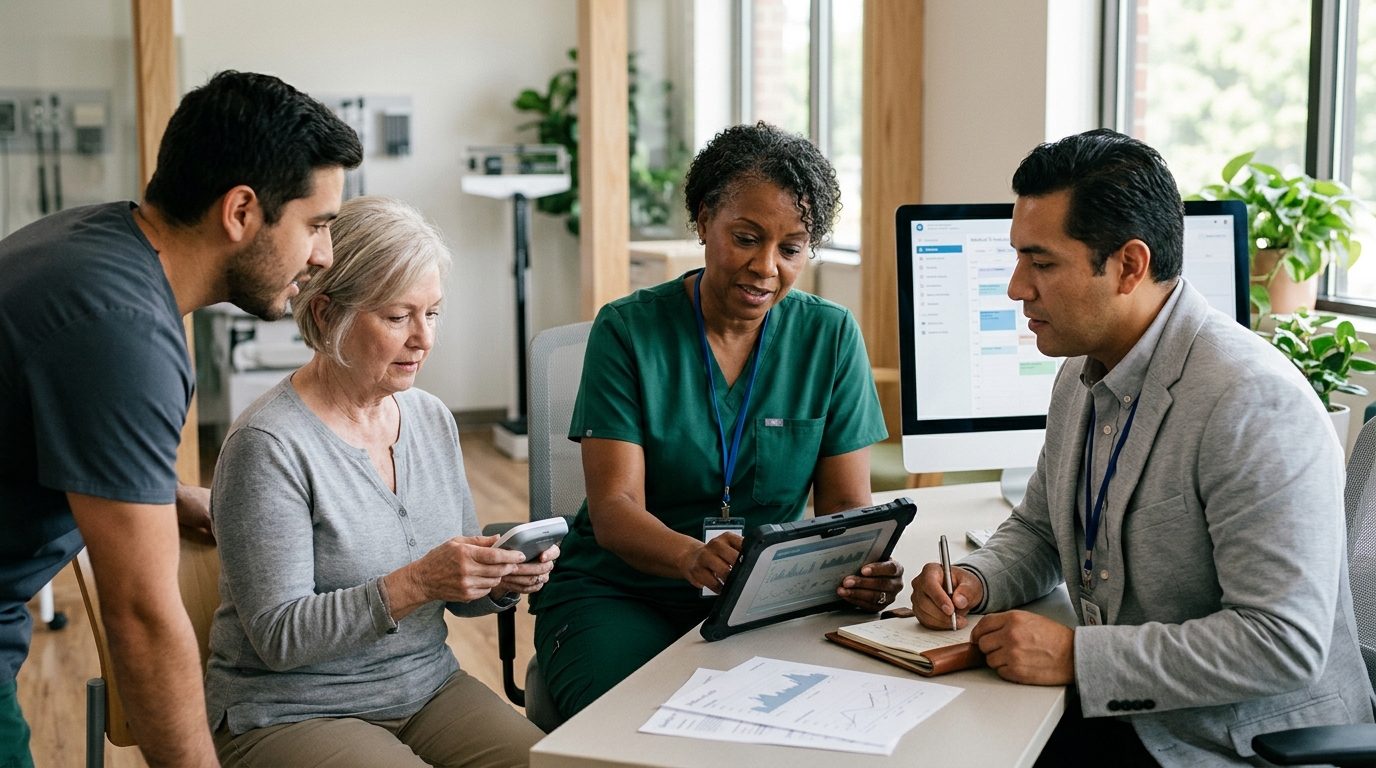
    Transitioning to continuous digital tracking requires targeted workforce training. Clinical staff must adapt to managing continuous biometric data streams rather than relying solely on episodic in-person exams, while non-clinical caregivers must learn to navigate connected monitoring platforms.

    Practical execution also depends on overcoming rural infrastructure obstacles. Stable broadband connectivity and accessible user interfaces remain essential for low-income households and elderly patients who may struggle with complex hardware. When implemented effectively, continuous remote monitoring replaces periodic visits with proactive management, allowing care teams to detect physiological changes early and reduce avoidable emergency room visits.

    Senator Ted Budd stated that deploying new technology and delivery strategies helps rural patients receive care faster and more conveniently, ensuring smaller communities are not left behind. By creating interconnected digital platforms, rural practices can coordinate complex care plans directly with family members, reducing caregiver burnout and ensuring patients adhere to prescribed treatment regimens in their own homes.

    Nationwide Federal Investments in Emergency and Specialized Remote Care

    North Carolina’s grant is part of a broader series of federal investments targeting rural healthcare modernization across multiple states. In South Dakota, the federal government allocated $7.2 million across 25 projects to expand ambulance-based telemedicine, fund emergency medical services workforce training, upgrade dispatch communications, and improve data sharing between transit crews and hospitals.

    Together, these distinct state-level initiatives demonstrate a synchronized federal strategy to modernize pre-hospital emergency care, decentralized crisis response, and specialized remote monitoring throughout the country. Representative Jeff Crank noted that these rural health investments, funded through legislation providing $50 billion nationally, represent a transformative effort to ensure the long-term operational sustainability of rural healthcare providers.

    Telehealth Billing Policy and Regulatory Shifts for Remote Care

    Alongside direct infrastructure grants, federal regulators are restructuring reimbursement frameworks to support ongoing virtual healthcare delivery. The Centers for Medicare & Medicaid Services announced Change Request 14468, introducing new Medicare billing requirements for Federally Qualified Health Centers and Rural Health Clinics effective October 1, 2026.

    Under these updated rules, clinics will no longer bill distant-site non-behavioral telehealth visits using the universal HCPCS code G2025. Instead, facilities must bill the specific CPT or HCPCS code corresponding to the exact service provided from CMS’s approved Medicare telehealth services list, accompanied by the appropriate telehealth modifier.

    This shift ensures that remote care services receive accurate clinical coding and standardized Medicare reimbursement. By establishing service-specific billing rules, federal authorities provide community health centers with a transparent, sustainable financial mechanism to maintain remote patient consultations long after initial grant funding concludes.

    The combination of multi-million-dollar technology investments and standardized Medicare billing rules creates a stable framework for the future of rural remote caregiving. As health clinics across North Carolina, South Dakota, and Colorado deploy modernized hardware and connect with home-based caregivers, federal policy adjustments taking effect through 2026 will reinforce clinical sustainability. Healthcare administrators and remote care providers should continue monitoring regional grant rollouts and prepare their administrative workflows for incoming billing compliance deadlines.

    Frequently Asked Questions

    How does remote patient monitoring benefit rural patients and caregivers?

    Remote patient monitoring tracks continuous biometric data such as blood pressure, glucose, and oxygen levels from home. This reduces travel burdens for rural families and allows clinical teams to detect health changes early to prevent emergency room visits.

    What Medicare billing changes for rural telehealth take effect in October 2026?

    How are federal grants supporting rural emergency medical services?

    Federal funding supports ambulance-based telemedicine, emergency workforce training, dispatch communication upgrades, and improved data sharing between transit crews and receiving hospitals.

  • Smart Home Safety for Seniors: Complete Guide

    Smart Home Safety for Seniors: Complete Guide

    For many older adults, nothing compares to the comfort of remaining at home, surrounded by familiar routines, personal freedom, and a lifetime of cherished memories. Yet, staying independent can grow challenging as natural changes in vision, strength, and mobility take hold over time. Embracing smart home safety for seniors has emerged as an essential bridge, helping older adults maintain their autonomy while giving loved ones complete confidence in their everyday well-being.

    Senior safety technology is no longer limited to isolated emergency clickers or noisy, intrusive gadgets. Instead, families are turning to layered smart home ecosystems that accumulate quietly in the background, working together to safeguard daily routines. This gradual shift delivers meaningful peace of mind to family members and caregivers without stripping away an older adult’s personal dignity or sense of control.

    Table of Contents

    Table of Contents — Smart Home Safety for Seniors: Complete Guide
    1. Passive Monitoring: How Ambient Technology Tracks Safety Without Buttons
    2. Intelligent Alerts and Connected Response Networks
    3. Long-Distance Caregiving: Coordinating Care with Light-Touch Tech
    4. Practical Takeaway: Creating Your Senior Smart Safety Action Plan
    5. Conclusion
    6. Frequently Asked Questions

    Passive Monitoring: How Ambient Technology Tracks Safety Without Buttons

    Passive Monitoring: How Ambient Technology Tracks Safety Without Buttons — Smart Home Safety for Seniors: Complete Guide

    Traditional medical alert pendants have long served as a vital safety net, but they carry a fundamental flaw: they require intentional human action. If an older adult experiences an unexpected fall or suffers a sudden medical issue, reaching for a lanyard or pressing a button may simply be impossible. Furthermore, gradual declines in mobility or strength often go unnoticed because an aging parent might never think to bring them up or ask for help.

    Ambient, embedded home technology solves this vulnerability by monitoring safety passively. Rather than waiting for a resident to call out for help, smart sensors placed throughout the house quietly observe daily activity patterns without requiring any direct interaction from the senior. These background systems learn the natural rhythm of the household over time, recognizing typical behaviors and identifying subtle deviations that could signal a problem.

    By monitoring daily habits, smart home sensors can detect critical warning signs, such as:

    • Unusual delays or frequent disruptions when getting out of bed in the morning.
    • Exterior doors opening at abnormal or unexpected hours of the night.
    • Sudden reductions in kitchen activity, appliance use, or meal preparation.
    • Extended periods of unexpected inactivity in areas where movement is normally constant.

    Because these passive networks rely on ambient motion and contact sensors rather than intrusive video cameras, they respect privacy while maintaining safety. Families gain the ability to spot subtle changes in mobility or health well before an acute emergency occurs, allowing for proactive adjustments rather than reactive panics.

    Intelligent Alerts and Connected Response Networks

    Intelligent Alerts and Connected Response Networks — Smart Home Safety for Seniors: Complete Guide

    The rise of ambient monitoring does not make physical alert devices obsolete; rather, it elevates them into a broader, more intelligent safety network. Simple push-buttons remain valuable because they provide an immediate, deliberate way to ask for assistance. However, modern emergency hardware now pairs that straightforward physical trigger with machine-learning artificial intelligence.

    Industry leaders have adapted these tools to fit modern lifestyles. As representatives from Bay Alarm Medical have observed, traditional help buttons now function as central components inside wearable smartwatches equipped with learning algorithms. These devices can differentiate between regular daily movement and sudden, concerning impacts, ensuring that fall detection works seamlessly alongside manual controls.

    When evaluated across the broader care ecosystem, modern emergency hardware stands out for its ability to integrate with response networks. Wearables and in-home hubs can instantly connect an individual to trained dispatchers, family members, or emergency responders. By integrating passive detection with immediate two-way communication channels, these systems dramatically reduce the critical response window during an urgent event.

    Long-Distance Caregiving: Coordinating Care with Light-Touch Tech

    Managing the safety of an aging parent from across town or across the country can easily become overwhelming. Effective long-distance care relies on a light-touch technology framework paired with structured communication protocols. By utilizing smart devices that share non-invasive activity updates, families can keep tabs on daily routines without calling constantly or making an aging parent feel micromanaged.

    A structured remote care plan also helps siblings and extended family members divide caregiving responsibilities evenly. Rather than allowing one local relative to bear all the mental and logistical weight, families can establish shared update routines and clear rules for missed calls or unexpected silence. Setting predefined guidelines ensures that everyone knows when to reach out, what constitutes an anomaly, and when to step in.

    Automating routine check-ins through smart home alerts prevents primary caregiver fatigue and protects family relationships. Family members can focus their phone calls and visits on meaningful connection and quality time, knowing that the underlying technology is handling the continuous monitoring in the background.

    Practical Takeaway: Creating Your Senior Smart Safety Action Plan

    Bringing smart safety tools into an aging parent’s home works best when implemented as a thoughtful, collaborative process. Establishing a reliable local response plan ensures that technology alerts are answered quickly and effectively by real people.

    To establish a balanced, privacy-friendly safety plan for your loved one, follow these practical steps:

    • Designate a Local Response Network: Identify trusted nearby neighbors, friends, or local relatives who can physically visit the home when remote family members cannot make contact.
    • Establish Action Triggers: Clarify the exact events that warrant a physical check-in, such as two consecutive missed morning calls or a sensor reporting zero kitchen activity by mid-morning.
    • Implement Light-Touch Hardware: Start with non-intrusive motion sensors in high-traffic areas and an easy-to-wear smartwatch or alert button that fits your loved one’s style and comfort level.
    • Set Clear Communication Protocols: Agree on a consistent daily communication cadence that respects the older adult’s independence while keeping family members informed.

    Conclusion

    Smart home safety technology offers an empowering solution for older adults who want to age in place safely and comfortably. By combining non-intrusive ambient sensors, intelligent wearables, and a clear family support plan, you can protect your loved one’s independence while safeguarding their physical health. Take time this week to review your family’s current caregiving strategy and explore how light-touch smart devices can bring lasting peace of mind to your household.

    Frequently Asked Questions

    How does passive smart home monitoring work for seniors?

    Passive monitoring uses ambient motion and contact sensors to observe daily activity patterns and flag unusual disruptions without requiring the senior to push a button or wear invasive devices.

    How do modern alert devices differ from traditional alert pendants?

    Modern alert devices pair physical buttons with machine-learning algorithms in wearables like smartwatches, distinguishing normal movements from falls and connecting directly to response networks.

    How does smart home technology support long-distance caregiving?

    Smart devices provide non-intrusive activity updates and automated check-ins, allowing remote family members to monitor safety and coordinate responsibilities without micromanaging their loved ones.

    Sources