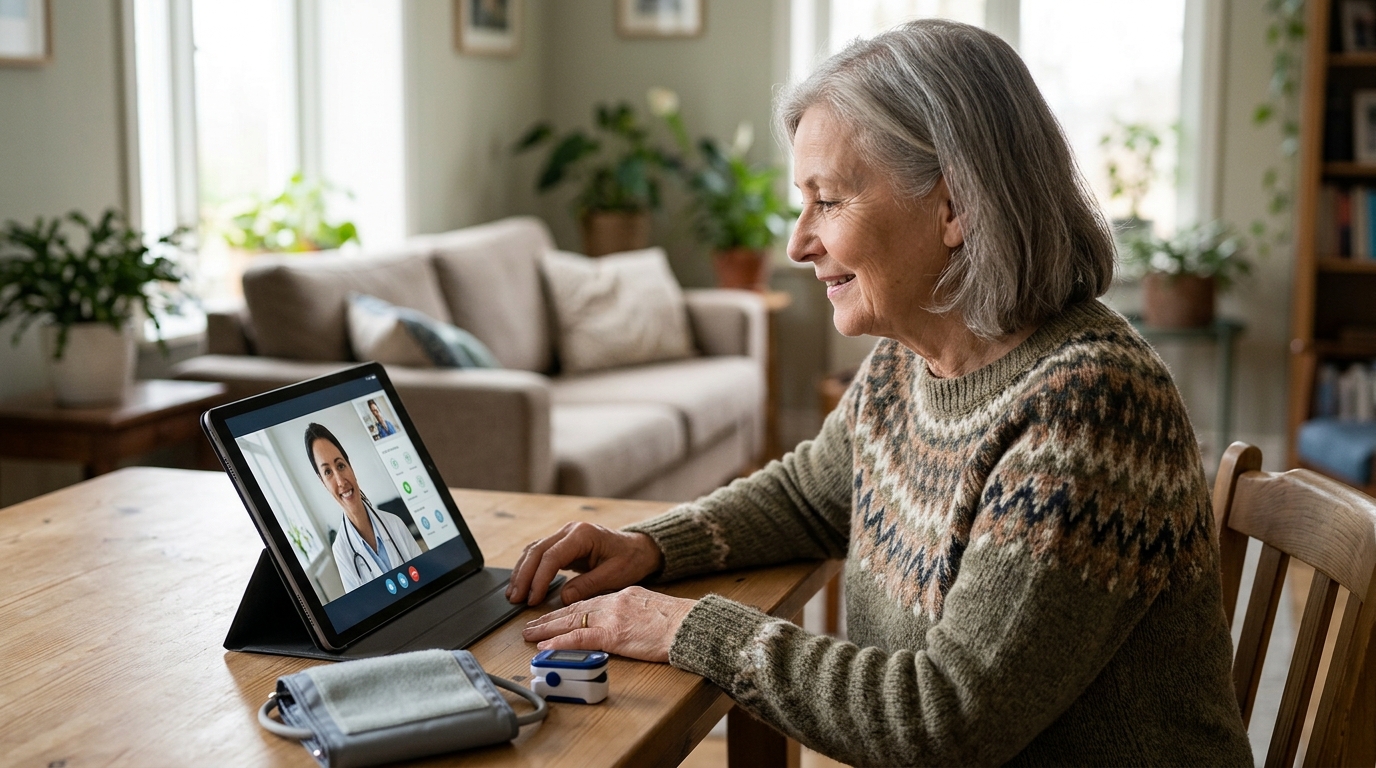
This federal grant addresses persistent healthcare access disparities in rural regions, where long travel distances and a shortage of medical specialists often delay necessary treatment. By funding secure electronic health record upgrades and remote patient monitoring infrastructure, the initiative equips homebound individuals and remote caregivers with practical tools to manage chronic conditions alongside local medical teams. The targeted state-level upgrades align with broader federal efforts to establish a modern, decentralized healthcare delivery model across rural America.
Table of Contents

- Key Components of the North Carolina Healthcare Technology Grant
- Implementation for Remote Caregivers and Local Clinics
- Nationwide Federal Investments in Emergency and Specialized Remote Care
- Telehealth Billing Policy and Regulatory Shifts for Remote Care
- Frequently Asked Questions
Key Components of the North Carolina Healthcare Technology Grant

These technical upgrades directly target the infrastructure deficits that historically disrupt rural healthcare delivery. By strengthening local network security and digitizing patient record systems, regional clinics can integrate remote monitoring hardware that tracks vital signs and patient status outside traditional clinical settings.
The deployment of remote monitoring technology allows clinics to observe continuous patient data feeds, including blood pressure, blood glucose, and oxygen levels, without requiring in-person visits. This operational shift reduces transportation burdens for rural families and elderly residents who otherwise travel hours for routine checkups. Furthermore, modern electronic records give attending physicians immediate access to accurate patient history, enabling timely clinical interventions before minor symptoms escalate into medical emergencies.
Integrating these clinical data systems also protects sensitive patient information against cyber threats while maintaining uninterrupted communication links between community clinics and regional medical centers. Representative Greg Murphy noted that expanding telehealth, improving electronic records, strengthening cybersecurity, and utilizing artificial intelligence responsibly will help rural clinicians modernize their practices while keeping high-quality care closer to home.
Implementation for Remote Caregivers and Local Clinics

The influx of digital tools fundamentally alters daily workflows for local clinics and family caregivers assisting patients with chronic illnesses. Upgraded virtual care systems establish direct communication channels between home-based caregivers and off-site clinical specialists, allowing for real-time consultations and immediate care adjustments.
Transitioning to continuous digital tracking requires targeted workforce training. Clinical staff must adapt to managing continuous biometric data streams rather than relying solely on episodic in-person exams, while non-clinical caregivers must learn to navigate connected monitoring platforms.
Practical execution also depends on overcoming rural infrastructure obstacles. Stable broadband connectivity and accessible user interfaces remain essential for low-income households and elderly patients who may struggle with complex hardware. When implemented effectively, continuous remote monitoring replaces periodic visits with proactive management, allowing care teams to detect physiological changes early and reduce avoidable emergency room visits.
Senator Ted Budd stated that deploying new technology and delivery strategies helps rural patients receive care faster and more conveniently, ensuring smaller communities are not left behind. By creating interconnected digital platforms, rural practices can coordinate complex care plans directly with family members, reducing caregiver burnout and ensuring patients adhere to prescribed treatment regimens in their own homes.
Nationwide Federal Investments in Emergency and Specialized Remote Care
North Carolina’s grant is part of a broader series of federal investments targeting rural healthcare modernization across multiple states. In South Dakota, the federal government allocated $7.2 million across 25 projects to expand ambulance-based telemedicine, fund emergency medical services workforce training, upgrade dispatch communications, and improve data sharing between transit crews and hospitals.
Together, these distinct state-level initiatives demonstrate a synchronized federal strategy to modernize pre-hospital emergency care, decentralized crisis response, and specialized remote monitoring throughout the country. Representative Jeff Crank noted that these rural health investments, funded through legislation providing $50 billion nationally, represent a transformative effort to ensure the long-term operational sustainability of rural healthcare providers.
Telehealth Billing Policy and Regulatory Shifts for Remote Care
Alongside direct infrastructure grants, federal regulators are restructuring reimbursement frameworks to support ongoing virtual healthcare delivery. The Centers for Medicare & Medicaid Services announced Change Request 14468, introducing new Medicare billing requirements for Federally Qualified Health Centers and Rural Health Clinics effective October 1, 2026.
Under these updated rules, clinics will no longer bill distant-site non-behavioral telehealth visits using the universal HCPCS code G2025. Instead, facilities must bill the specific CPT or HCPCS code corresponding to the exact service provided from CMS’s approved Medicare telehealth services list, accompanied by the appropriate telehealth modifier.
This shift ensures that remote care services receive accurate clinical coding and standardized Medicare reimbursement. By establishing service-specific billing rules, federal authorities provide community health centers with a transparent, sustainable financial mechanism to maintain remote patient consultations long after initial grant funding concludes.
The combination of multi-million-dollar technology investments and standardized Medicare billing rules creates a stable framework for the future of rural remote caregiving. As health clinics across North Carolina, South Dakota, and Colorado deploy modernized hardware and connect with home-based caregivers, federal policy adjustments taking effect through 2026 will reinforce clinical sustainability. Healthcare administrators and remote care providers should continue monitoring regional grant rollouts and prepare their administrative workflows for incoming billing compliance deadlines.
Frequently Asked Questions
How does remote patient monitoring benefit rural patients and caregivers?
Remote patient monitoring tracks continuous biometric data such as blood pressure, glucose, and oxygen levels from home. This reduces travel burdens for rural families and allows clinical teams to detect health changes early to prevent emergency room visits.
What Medicare billing changes for rural telehealth take effect in October 2026?
How are federal grants supporting rural emergency medical services?
Federal funding supports ambulance-based telemedicine, emergency workforce training, dispatch communication upgrades, and improved data sharing between transit crews and receiving hospitals.